
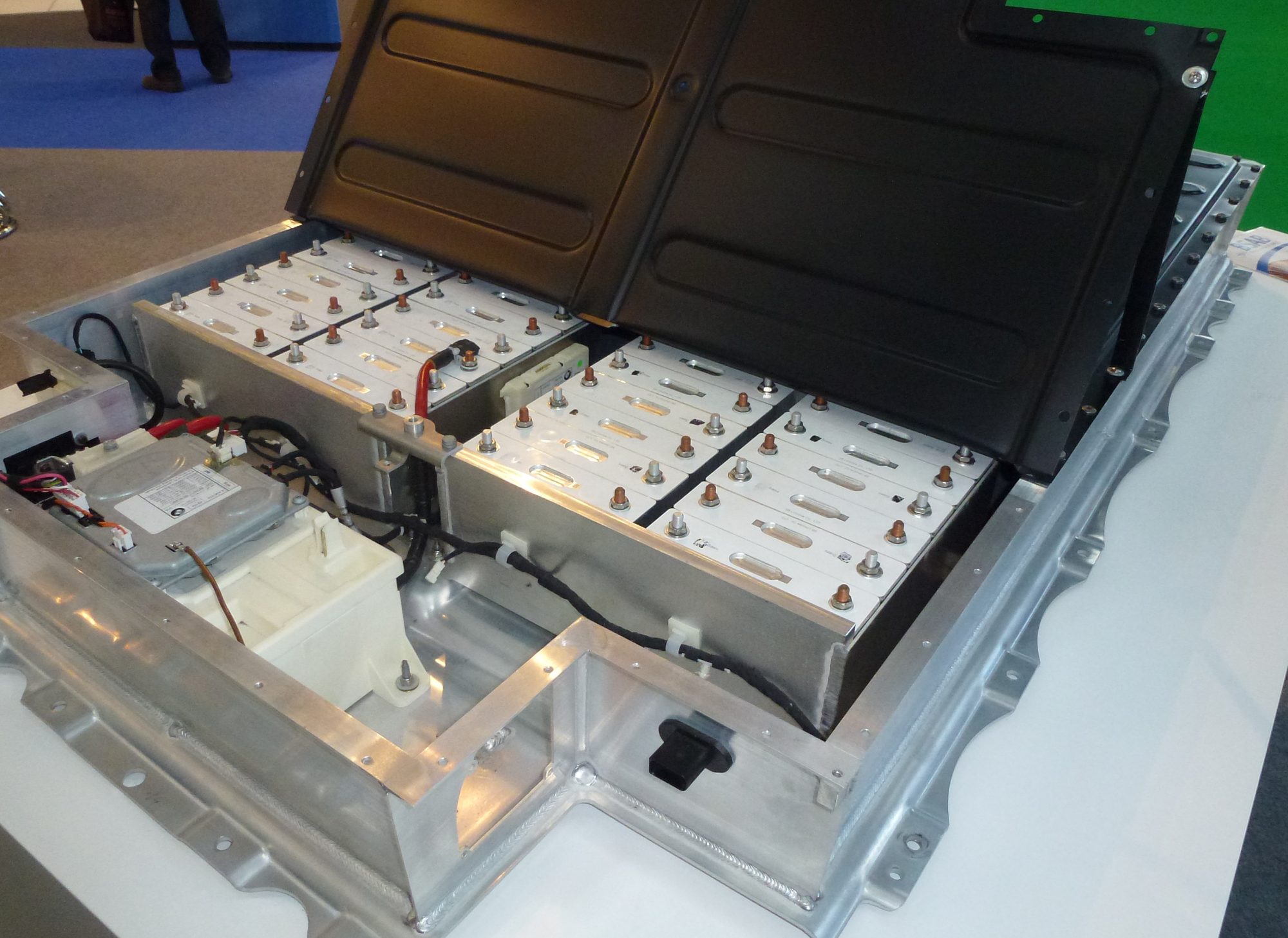
How do EV batteries work? Lithium ions shuttle between two electrodes, and the cost of that chemistry keeps falling. Lithium-ion battery packs averaged $108 per kilowatt-hour in 2025, down 8% from 2024, according to BloombergNEF. Battery-electric vehicle packs averaged $99. The pack's chemistry and design shape range, cost and lifespan. • Each cell pairs a cathode and an anode, separated by an electrolyte. Charging pushes electrons through an outside circuit toward the anode while lithium ions cross the electrolyte to balance them. Driving reverses both flows, the US Department of Energy says. • Cells are grouped into modules, and modules into a pack. A battery management system measures and controls the charge of every cell and monitors pack temperature, while liquid or air cooling keeps it in range, per the DOE. • Chemistry is the main trade-off. LFP packs hold about one-fifth less energy by mass than NMC, the International Energy Agency says, but can charge to 100% without significant wear. LFP packs averaged $81/kWh versus $128 for NMC, per BloombergNEF, and LFP made up over 55% of EV batteries deployed in 2025, per the IEA. • Many automakers offer 8-year/100,000-mile battery warranties, according to the DOE's Alternative Fuels Data Center. A DOE study suggests packs may last 12 to 15 years in moderate climates. Next could be a solid electrolyte: BYD plans to sell its first all-solid-state EV from 2027 and Toyota targets 2028, though the IEA expects the technology to stay in premium cars until the first half of the 2030s. Sources: industry and research data. #EVs #Batteries #ElectricVehicles #EnergyStorage #Tech
Comments (1)