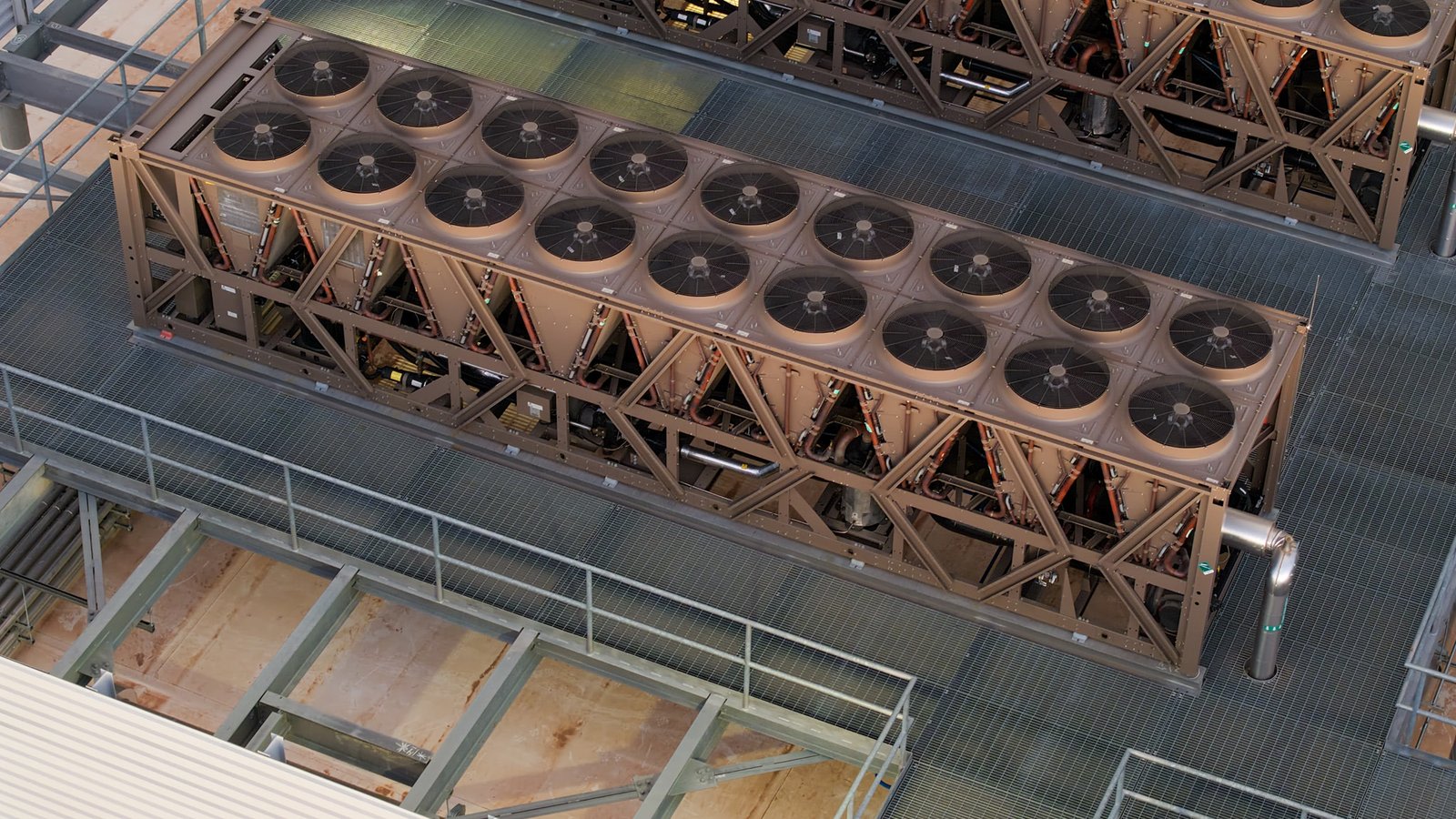
ABB agreed on Monday to buy Ziehl-Abegg, a family-owned German maker of high-efficiency fans and motors, in an ABB Ziehl-Abegg deal that values the target at an enterprise value of $2.65 billion. The Swiss engineering group said the purchase, which carries an equity value of $2.22 billion, will add electronically commutated fans to its motors and drives business and broaden its reach in heating, ventilation, air conditioning and data center cooling. The price shows how much industrial buyers will now pay for the hardware that keeps AI servers from overheating. ABB is paying 18.6 times Ziehl-Abegg's expected 2026 earnings before interest, taxes, depreciation and amortization, or EBITDA, for a business it says earns only a mid-single-digit operating margin. ABB shares still closed about 4.6% higher at 68.32 Swiss francs in Zurich, on a day when the broader Swiss market also rose. The deal is expected to close in the second half of 2027, subject to regulatory approvals. What is ABB buying with Ziehl-Abegg? Ziehl-Abegg, based in Künzelsau in southern Germany, makes axial and centrifugal fans, external rotor motors, ventilation systems and control electronics. Its products go into HVAC systems, data centers, clean rooms, medical equipment and elevator drives. The company employs about 6,300 people and expects revenue of about $1.4 billion this year, according to ABB's announcement. Rooftop HVAC units, a core market for EC fans Its core product is the EC fan. EC stands for electronically commutated: the motor has built-in electronics that switch the current and adjust speed precisely, which uses less power than older fixed-speed designs. Ziehl-Abegg also uses ferrite magnets, which ABB says reduce dependence on rare earth materials. The company opened a €100 million US manufacturing and research hub in 2024 and launched a €90 million capacity program this year. Sale plans surfaced after the death of owner Uwe Ziehl in June, regional broadcaster SWR reported. ABB said it will keep the headquarters in Künzelsau. Why does data center cooling matter to ABB? Data centers have become ABB's fastest-growing market. Business tied to them generated about 9% of group revenue in 2025, Bloomberg reported, and Chief Executive Morten Wierod sees no slowdown in data center investment despite recent market jitters around AI. In the third quarter, group orders rose 40% to a record $12.06 billion, with data center orders growing at a triple-digit rate. In the Motion division, which will absorb Ziehl-Abegg, orders rose 12% on a comparable basis to $2.46 billion, helped by HVAC for commercial buildings and data center cooling. The economics of fans explain the interest. ABB says a fan typically accounts for about 5% of the capital cost of a cooling system but about 80% of its lifetime energy use. As AI chips push power density higher, small gains in airflow efficiency translate into large electricity savings. Data center cooling fans are cheap to buy but costly to run Is the ABB acquisition price too high? Analysts called the valuation steep. Vontobel analyst Mark Diethelm described the multiple as "rich, with the target carrying low profitability but offering meaningful cost and sales synergies," and said the deal "will remain dilutive to ABB's high return on invested capital," according to Bloomberg. RBC Capital Markets analyst Sebastian Kuenne wrote that the valuation looks high but appears much more reasonable once targeted synergies are included. ABB argues the multiple will shrink. It expects EV to EBITDA to fall toward the low double digits once synergies are counted, and it wants Ziehl-Abegg's operating margin to reach roughly the Motion average within three years of closing. Motion reported an operational EBITA margin of 19.1% in the third quarter, so the target implies a large step up from mid-single digits. The closest comparison comes from the same region. In August, US-listed Madison Air agreed to buy ebm-papst, another Hohenlohe fan maker, at an enterprise purchase price of $5.4 billion. Madison Air said its effective price represented 14.6 times ebm-papst's forecast 2026 adjusted EBITDA of about $343 million, on revenue of about $2.8 billion. Measured against sales, the two deals are similar at roughly 1.9 times; ABB is paying more per dollar of profit because Ziehl-Abegg earns less. ABB Ziehl-Abegg deal compared with the ebm-papst sale What are the risks for the ABB Ziehl-Abegg deal? The main risk is execution. Lifting margins several times over in three years depends on purchasing savings, factory efficiency and cross-selling through ABB's sales network. Timing is another. Closing is not expected until the second half of 2027, and ABB is committing capital while markets remain jittery about the AI boom. The stock remains well below its June high of 89.14 francs, and ABB has flagged weak demand in residential buildings and process industries. It is also absorbing Rotork, its largest acquisition, agreed this year. The next checkpoint comes with ABB's fourth-quarter results on Jan. 28, when investors will look for updated data center order trends and any early detail on how quickly the Ziehl-Abegg margin gap can close. Earlier Tabbicus coverage of Samsung's interest in Modine and GE Vernova's Trench deal shows the pattern: buyers are paying up for the equipment behind AI's power and heat problem, and the bill for cooling is rising with it. Quick facts Deal: ABB to buy Ziehl-Abegg for an enterprise value of $2.65 billion, equity value $2.22 billion. Valuation: 1.9 times expected 2026 sales and 18.6 times EBITDA, which ABB expects to fall toward low double digits with synergies. Target: About $1.4 billion in expected 2026 revenue, about 6,300 employees, headquarters kept in Künzelsau. Timing: Closing expected in the second half of 2027, subject to regulatory approvals. Sources: company announcements, ABB quarterly results, and Bloomberg, Reuters and SWR reporting