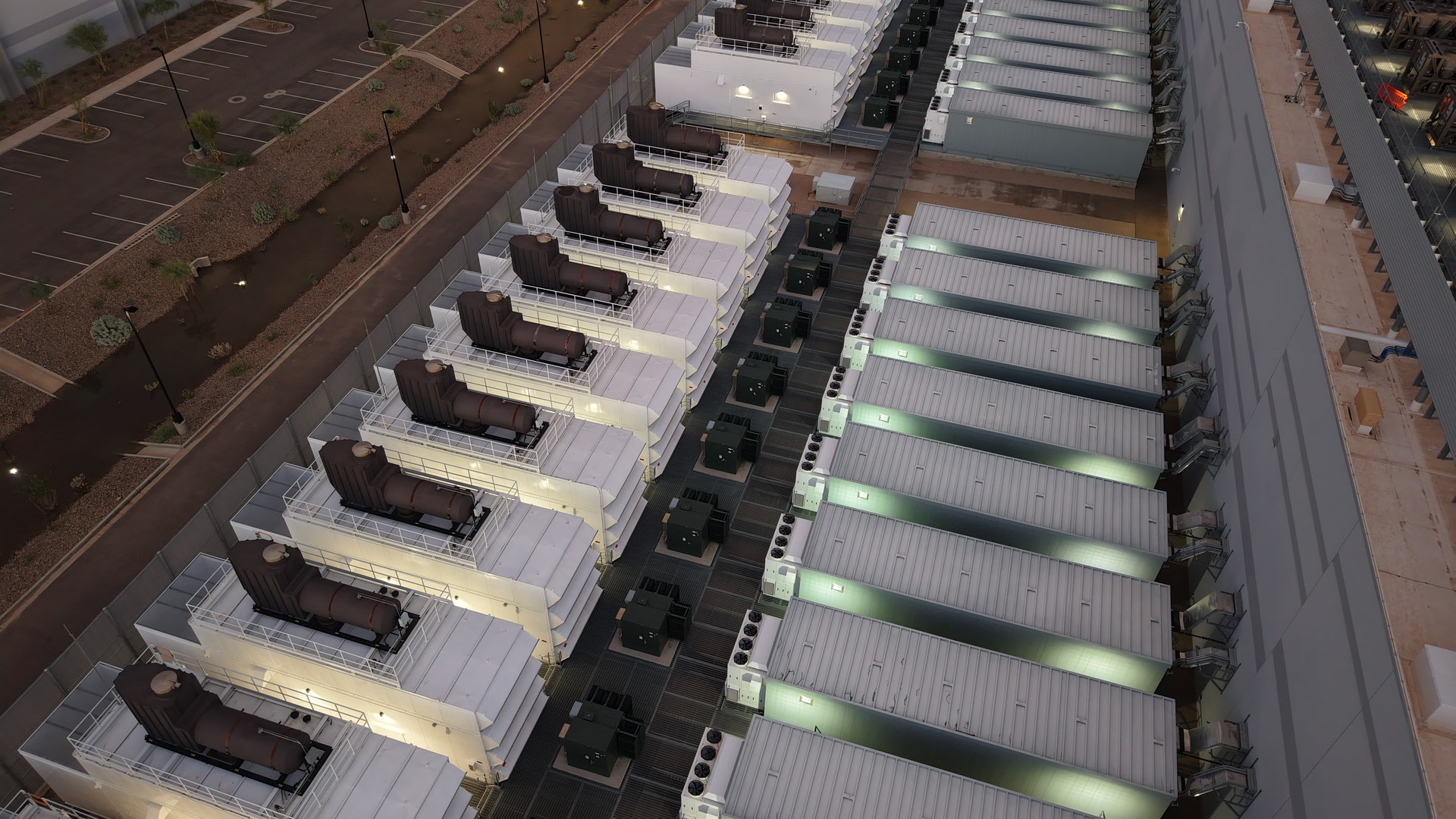
Anthropic gas generator deal shows the AI power equipment crunch Analysis · Tech · Business Strategy · Nature & Environment · Cover: ai-data-center-gas-generators-power-plant-cover.jpg Anthropic has agreed to pay about $3.4 billion for 1.7 gigawatts of gas-fired generators, the Financial Times reported on Nov. 8, calling it the largest known single purchase of power-generation equipment by an AI lab. In the Anthropic gas generator deal, the Claude developer took over Caterpillar generator orders that OnePWR Solutions, a San Antonio equipment supplier, placed about two years ago but could not finance. Neither company commented, and Reuters, in a report carried by CNBC, said it could not verify the account. The AI bottleneck has spread from chips to the machines that make electricity. Days earlier, Riot Platforms said it had leased its entire 910-megawatt campus in Corsicana, Texas, to a "Frontier AI Lab" for 15 years, about $28 billion of rent over the initial term. Riot's quarterly filing names the tenant as Anthropic PBC. A company that has mostly rented computing power is now lining up megawatts, on the grid and off it. What did Anthropic buy, and why take over someone else's order? According to the FT, Anthropic bought OnePWR's equipment commitments in late September. It did not acquire the supplier and hired none of its staff. OnePWR will provide engineering and construction help to install the units at Anthropic data centers. Data Center Dynamics, citing the report, said the generators were ordered before recent price increases and should be available within the next two years. The headline price works out to roughly $2,000 per kilowatt of capacity. What Anthropic really bought, though, was a place in line. For a lab whose prospectus lists $895.4 billion of cloud and data-center commitments through 2045, as DCD noted, a two-year head start matters more than the sticker price. Why are gas turbine and generator lead times gating AI data centers? Caterpillar chief executive Joe Creed told analysts on Oct. 29 the company is "now taking some large reciprocating orders as far out as 2029 and turbine orders into 2030." Siemens Energy's finance chief said in August that lead times across the company run three years or more. GE Vernova ended September with 64 gigawatts of firm gas-equipment backlog and 58 gigawatts of slot reservations, deposits that hold a future factory slot before a firm order. It shipped 5 gigawatts in the quarter, so its firm backlog alone equals about three years of output at that pace. Mitsubishi Heavy Industries has 83 large-frame turbines, about 37 gigawatts, under contract. GE Vernova shipped 5 gigawatts in the third quarter against 122 gigawatts booked or reserved. Grid connections are slow, too, because utilities must study and often build new lines before a large load plugs in. A finished but unpowered data center earns nothing on chips that lose value each quarter. Equipment ordered today arrives in 2029 or 2030; Anthropic's taken-over orders arrive sooner. How does behind-the-meter power work for a data center? "Behind the meter" means the power plant sits on the customer's side of the utility meter. Generators on or next to the site feed the data center directly instead of sending electricity across the public transmission network. It can serve as bridge power until a grid connection arrives or as permanent prime power. Two kinds of gas machines dominate. Reciprocating engines, large cousins of a truck engine, come in blocks of a few megawatts, start quickly and can be added in rows, so one failure takes out only a sliver of capacity. Turbines produce more per unit but need longer factory slots. Either way the site needs a pipeline, spare units and someone to carry fuel-price risk. Riot's Corsicana lease shows the other model. Riot brings grid power through its own high-voltage equipment to powered pads, and the tenant pays for electricity as a pass-through. Rent starts at $130 per kilowatt a month and rises 3% a year, the filing shows. Google's Wyoming campus, covered earlier on Tabbicus, takes a third route, with fuel cells. What does it mean for Caterpillar, GE Vernova, Siemens Energy and Mitsubishi? Caterpillar's power generation sales rose 30% to $3.42 billion in the third quarter, led by turbines and large reciprocating engines for data centers, and retail sales in the business jumped 75%. Its company-wide backlog hit a record $78 billion. Creed said adding capacity is "still the top pacing factor for growth" in the segment, and Caterpillar plans to nearly triple large-engine output by 2030 from 2024. Caterpillar's power generation sales grew 30% as data center demand rose. GE Vernova's power orders jumped 178% organically to $21.8 billion, and it expects at least 130 gigawatts booked or reserved by year-end. Siemens Energy booked 15 gigawatts of gas orders in its fiscal third quarter. Mitsubishi aims to double new-unit production capacity for combined-cycle turbine plants and says it has booked North American data-center equipment orders. The Anthropic deal also shows that a factory slot is a tradable asset. The risk runs the other way if AI spending cools: 58 gigawatts of GE Vernova's total are reservations, not firm orders. What should investors watch next? Watch whether Anthropic or OnePWR confirms the deal and names sites. Riot's first 400 megawatts are due in September 2027. GE Vernova's year-end figure will show whether reservations keep converting to orders. Then comes fuel: generators running around the clock tie AI economics to gas prices that utilities once absorbed. Quick facts Deal: Anthropic to pay about $3.4 billion for 1.7 GW of Caterpillar gas generators ordered by OnePWR Solutions (FT, Nov. 8, 2026; unconfirmed) Timing: generators expected within about two years; OnePWR to help with installation Lease: Riot Platforms' 910 MW Corsicana campus, 15 years, about $28 billion; tenant named as Anthropic in Riot's 10-Q Lead times: Caterpillar engine orders out to 2029, turbines into 2030; Siemens Energy three years or more Backlogs: GE Vernova 122 GW incl. reservations; Siemens Energy 69 GW; Mitsubishi Heavy 37 GW of large frames Caterpillar: power generation sales +30% to $3.42 billion in 3Q 2026; backlog $78 billion Sources: reporting by the Financial Times, Reuters, CNBC, Data Center Dynamics and Utility Dive, plus filings and results from Riot Platforms, Caterpillar, GE Vernova, Siemens Energy and Mitsubishi Heavy Industries.