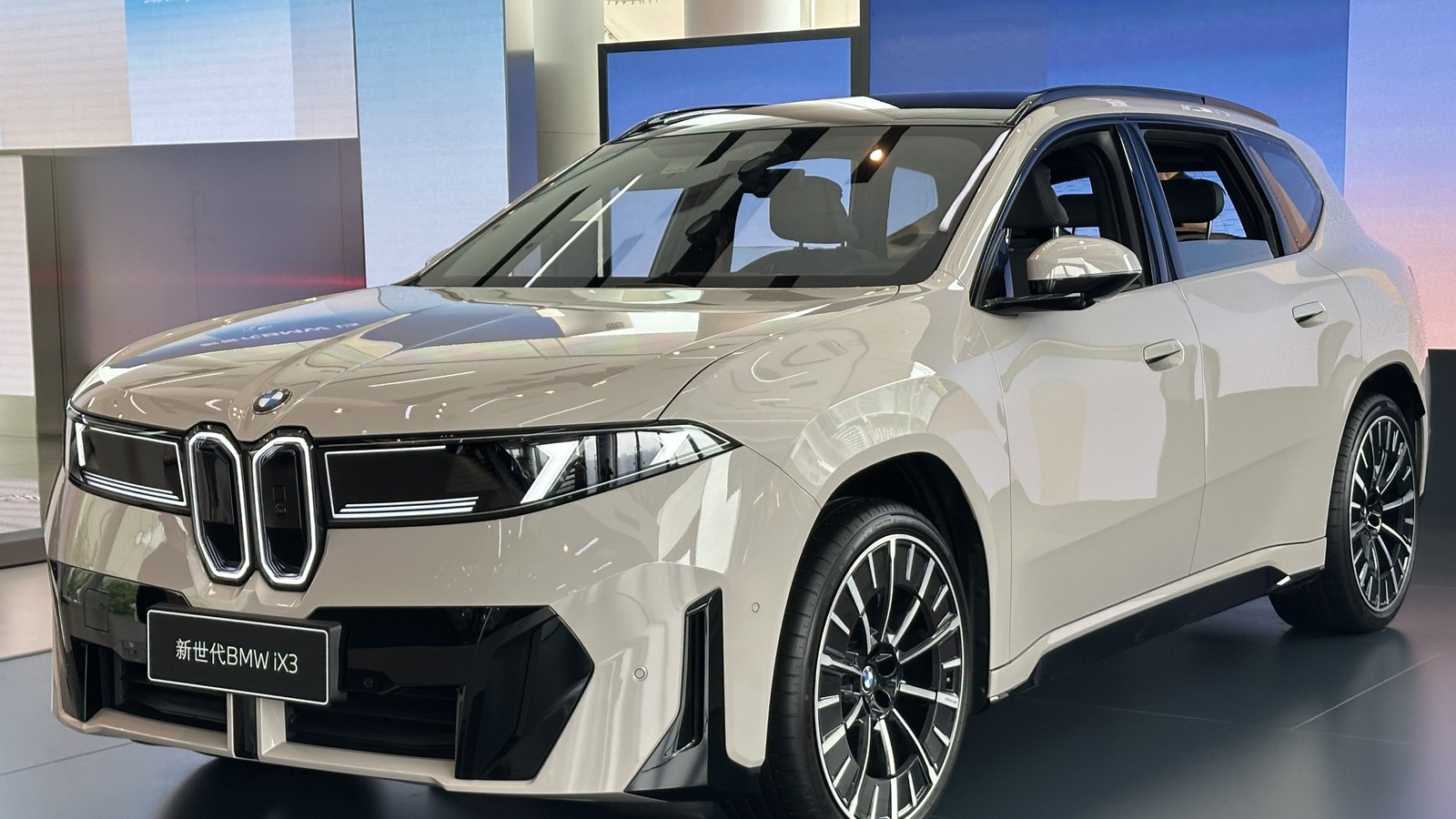
BMW issued its second profit warning in less than five months, saying its car business could finish 2026 with an operating margin between minus 0.5% and plus 0.5% as it pays to retire older electric models early and shrink its workforce. The Munich carmaker cut the forecast from 1% to 3% on Tuesday evening and reported third-quarter results on Wednesday. The warning is less about collapsing demand than about how fast BMW wants to rebuild its factory network. Demand for its new Neue Klasse electric cars is strong, so BMW is adding shifts, speeding up its sixth-generation battery technology and retiring some older Gen5 electric models early. Those moves and the job cuts will now cost about 2.5 percentage points of margin this year, double the 1.25 points BMW had flagged. Investors took it calmly. BMW shares rose 2.3% after the results, Reuters reported. Why did BMW issue a profit warning? BMW said the new charges are non-operational and will land in the fourth quarter. Excluding them, the company still expects an automotive margin above 2% for the year and automotive free cash flow above €2.5 billion. In its results release, BMW said the faster ramp-up created an opportunity to phase out previous vehicle and technology generations earlier. The other half of the charge comes from people. BMW launched a redundancy programme in July to cut 8,000 jobs in Germany. Chief Executive Milan Nedeljković said strong interest in the voluntary scheme let BMW finish it quickly, and management layers will now be cut faster, including 20% of senior vice president roles. "Current developments in our industry call for decisiveness and swift implementation," he said. How did BMW earnings hold up in the third quarter? Group pretax profit fell 10.6% to €2.08 billion on revenue of €30.45 billion, down 5.8%. The automotive margin narrowed to 3.4% from 5.2% a year earlier, ahead of the 3.1% analysts had expected. A supplier settlement over a brake-system warranty case helped, while tariffs cut about 1.25 percentage points. Deliveries fell 6.3% to 551,075 vehicles. Sales rose 2.6% in Europe and 2.5% in the US but dropped 24.8% in China, matching the decline in the overall Chinese market. Electric cars were the bright spot: battery-electric deliveries climbed 7.2% to 110,257, one in five BMW Group cars sold worldwide, and jumped 37.5% in Europe, where they made up 34.7% of deliveries. BMW Gen5 electric cars such as the i4 face shorter production runs as Neue Klasse production ramps up. What does Neue Klasse production mean for the supply chain? The quarter showed a carmaker managing two production systems at once. BMW built 511,419 cars in the third quarter, 17.3% fewer than a year earlier, and finance chief Walter Mertl said lower inventories added about €600 million to cash flow as production schedules were adjusted to market demand. Quarterly automotive free cash flow was still minus €566 million, hit by provisions and timing effects. On the new side, Neue Klasse production is running in Debrecen in Hungary, Munich, Dingolfing, Spartanburg in South Carolina and Shenyang in China. Debrecen has moved to three shifts and will build the iX4 alongside the iX3, which has drawn more than 100,000 orders, according to BMWBlog. Battery supply is being localised to match: BMW opened a Gen6 battery assembly plant in Irlbach-Straßkirchen in Bavaria in October to supply its German factories, started a Gen6 facility in Shenyang, and plans series production in Woodruff, South Carolina, before year-end, with San Luis Potosí in Mexico following next year. Nedeljković said the Gen6 products carry better margins, which is why BMW would rather absorb a one-time hit now than keep building older electric models. BMW is also reorienting its purchasing and wants to localise supply chains in each major region. Its quarterly statement warned that the AI investment boom is pushing up semiconductor prices, a cost pressure carmakers share with the memory chip shortage now hitting electronics makers. BMW Welt in Munich, next to the plant that now builds the electric i3 on Neue Klasse technology. Is BMW in better shape than other German carmakers? BMW faces the same pressures as its peers, from cheaper Chinese rivals to the cost of the electric transition. Volkswagen is in a months-long dispute with unions over plans to double group job cuts to 100,000, Reuters reported, and its own results showed how electric cars squeeze margins. BMW finished its smaller programme within three weeks. Analysts remain cautious. Matthias Hellstern of Scope Ratings said the charge shows BMW accepts that the industry must adapt to lower growth, particularly in China. "While the scale of the charge suggests management is aiming to address these issues decisively, I would not assume this is the end of the turbulence," he said. BMW is also spending less. Capital expenditure fell 17.1% to €3.66 billion in the first nine months and research and development spending fell 7.4%. The next test arrives this month in China, where BMW launches a long-wheelbase iX3 built in Shenyang and is weighing exports from that plant to other Asian markets. Management is targeting a 3% to 5% automotive margin in 2028 and a return to 8% to 10% early in the next decade, a path that now depends on Neue Klasse plants running as fast in Shenyang as they do in Debrecen. Quick facts New 2026 guidance: automotive EBIT margin of minus 0.5% to plus 0.5%, down from 1% to 3%; above 2% excluding restructuring and portfolio measures. Third quarter: pretax profit €2.08 billion (down 10.6%), revenue €30.45 billion, automotive margin 3.4%. Production and sales: output down 17.3% to 511,419 cars; deliveries down 6.3% to 551,075; China down 24.8%. Electric cars: 110,257 battery-electric deliveries (up 7.2%), 20% of global sales and 34.7% in Europe. Sources: BMW Group filings and statements, Reuters reporting and BMWBlog.