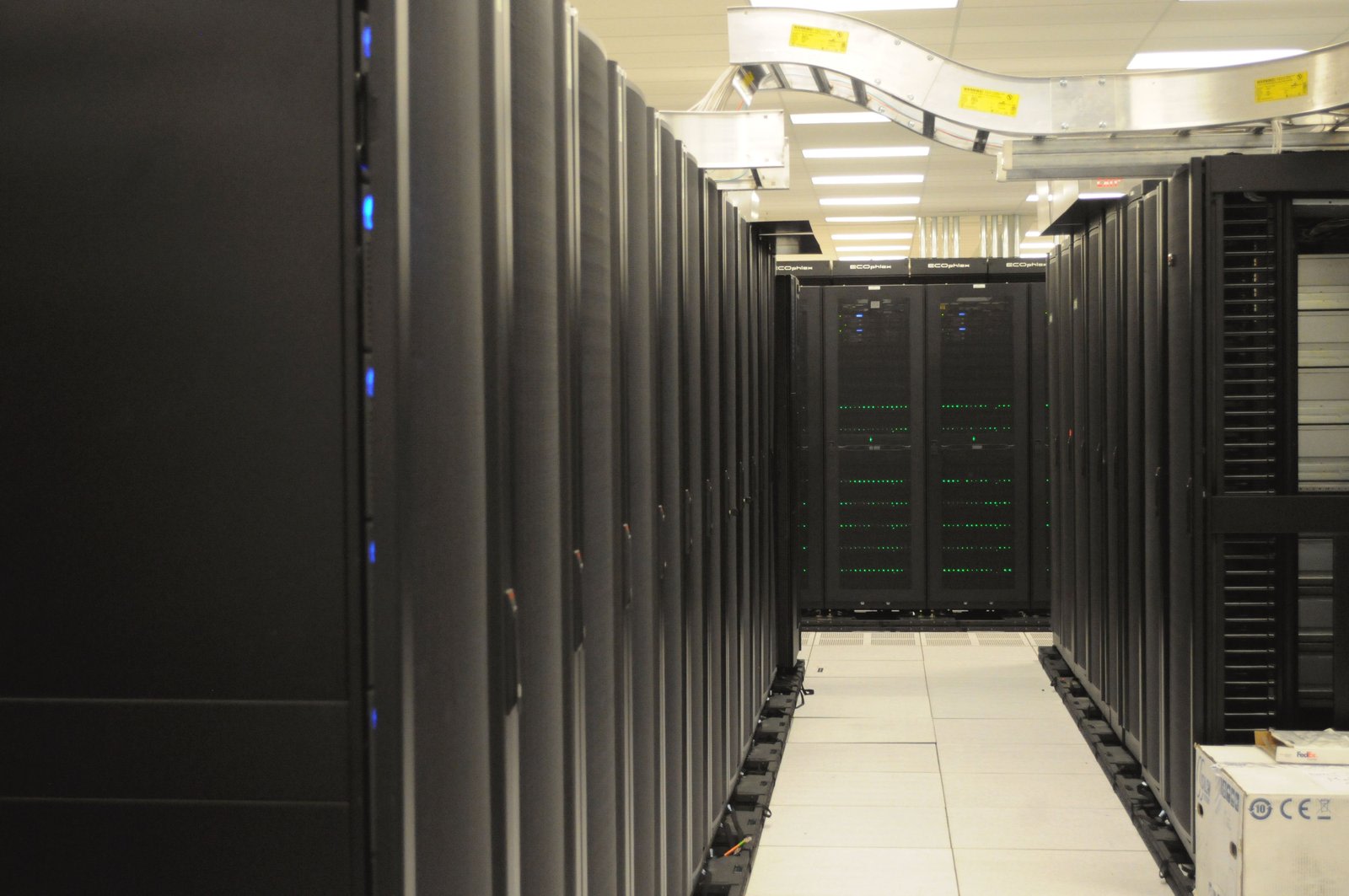
Dell AI servers drove a record quarter for Dell Technologies on Tuesday, as revenue more than doubled and the company raised its full-year forecasts for the third time this fiscal year on what it called accelerating demand for artificial-intelligence infrastructure. Revenue for the fiscal third quarter ended Oct. 30 rose 103% to $54.9 billion, above the $49.32 billion analysts expected, according to LSEG data cited by Reuters. Adjusted earnings per share of $9.45 compared with estimates of $6.59. Dell now expects fiscal 2027 revenue of $202 billion, up from $192 billion, and AI-optimized server revenue of $78 billion, up from $74 billion, according to its earnings release. Why it matters: Dell builds AI servers largely around Nvidia and AMD chips, so its order book is an early read on whether spending on AI data centers is holding up. The results also speak to a central investor worry during a volatile stretch for AI stocks: that AI servers add sales but little profit. How big is the Dell AI server business now? AI-optimized server revenue reached a record $22 billion in the quarter, up 291% from a year earlier and about 35% above the previous quarterly record of $16.4 billion, Chief Financial Officer David Kennedy said on the earnings call. Dell expects roughly $23.5 billion in the fourth quarter. The Infrastructure Solutions Group, which houses servers, storage and networking, posted revenue of $42 billion, up 198%. Traditional servers and networking contributed a record $15 billion, up 235%, and storage $4.9 billion, up 24%. Chief Operating Officer Jeff Clarke said the group's share of revenue over the past four quarters had risen to 68%, from 38% in fiscal 2024, the year Dell began selling AI servers. "We are now a different company," he said in the release. Why does the AI backlog matter for Dell? Dell booked $60.2 billion of AI orders in the quarter, its second straight quarter above $60 billion, and ended with a record backlog of $132.3 billion. That compares with $95 billion three months earlier and $51.3 billion at the end of the first quarter. Clarke said the sales pipeline remains a multiple of the backlog and that more than 7,500 customers are deploying Dell AI Factories, its bundles of servers, storage, networking and software for running AI models. A backlog turns into revenue only when customers have buildings, power and components ready. Clarke said each order is vetted for customer quality, access to capital, land and power, and that Dell tests complete racks before shipping and can stand one up within six hours of delivery. Kennedy said Dell's own financing is used selectively and short term, bridging customers from purchase order to go-live. Most new orders are for Nvidia's Vera Rubin NVL72 systems, Clarke said. Do AI servers make money for Dell? AI servers weigh on Dell's margin mix, and Kennedy referred on the call to the "mix pressure" of this year's AI server revenue. Asked about margins on Vera Rubin racks, Clarke said Dell was "still operating the business in the mid-single digits." Scale has offset that mix. Operating income in the infrastructure group rose 308% to $7.1 billion, an operating margin of 17%, up 4.6 percentage points. Operating expenses fell to 7% of revenue, the lowest in Dell's 42-year history, and the company-wide operating margin rose to 14.2%. Kennedy cautioned that margins would moderate sequentially as a favorable North American sales mix normalizes. The contrast with Hewlett Packard Enterprise was sharp. HPE shares fell about 16% on Tuesday after its outlook, with JPMorgan analysts expecting its Cloud & AI operating margin to fall to about 14% in fiscal 2027, Reuters reported. What does it mean for PCs and investors? Client Solutions Group revenue rose 3% to $12.9 billion, short of the $14.33 billion LSEG consensus cited by CNBC, after 20% growth in the prior quarter. Operating income fell 6% to $704 million. Clarke said customers are directing budgets to servers and storage and deferring PC refreshes as memory costs lift prices, a crunch he expects to last "clearly into 2027." Dell returned a record $4.9 billion to shareholders in the quarter and added $25 billion to its buyback authorization. The stock fell 11.8% to $295.28 in Tuesday's regular session amid a broad hardware sell-off, then rose about 5% in extended trading. It is up more than 130% this year but well below the record of about $588 reached after the September report, Yahoo Finance reported. The swings follow a broad AI stock sell-off, which Tabbicus examined in a look at the debt behind the AI boom. What comes next for Dell? Dell guided fourth-quarter revenue to about $56.3 billion and adjusted earnings per share to $8.40, above LSEG estimates of $53.61 billion and $7.50. Full-year adjusted EPS guidance rose to $29.68 from $25.50. Kennedy said Dell will keep prioritizing the infrastructure business while supply is tight and expects PC demand to stay soft next year. With an AI backlog about 1.7 times this year's guided AI server revenue, the question for fiscal 2028 is less about demand than about how quickly components, power and customer data centers let Dell turn orders into sales, and at what margin. Quick facts Quarter: fiscal third quarter 2027, ended Oct. 30, 2026, reported Nov. 24 Revenue: $54.9 billion, up 103%; adjusted EPS $9.45, up 265% AI servers: $22 billion revenue, $60.2 billion orders, $132.3 billion backlog Margins: infrastructure group 17%, company 14.2%, PC group about 5.5% Guidance: fiscal 2027 revenue $202 billion; AI server revenue $78 billion; adjusted EPS $29.68 Capital return: $4.9 billion in the quarter; buyback authorization raised by $25 billion Sources: Dell earnings release and earnings call, and reporting by Reuters, CNBC and Yahoo Finance.