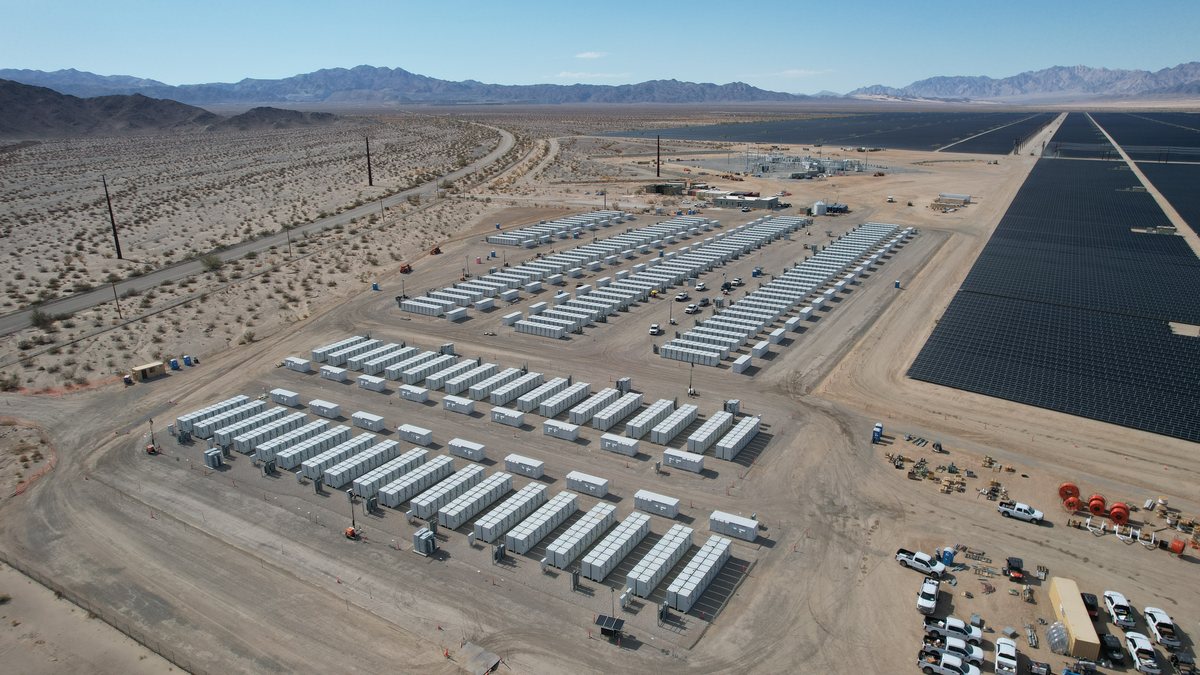
LG Energy Solution is turning its LG Energy Solution Wroclaw plant in Poland, which it describes as Europe's largest EV battery factory, into a supplier of grid storage as electric-car demand in the region stays weak. The South Korean company said on Nov. 20 that the site has added energy storage production lines and now builds complete storage units for one of Europe's largest battery projects. The shift matters because Europe spent the past decade building battery capacity for cars that have sold more slowly than planned. Stationary storage, which helps grids absorb wind and solar power, is now growing faster, and factories that can switch between the two markets stand a better chance of keeping their lines busy. The Wroclaw complex in Biskupice Podgorne represents a cumulative investment of 25 billion zlotys and employs about 6,500 people, according to the company. Poland's lithium-ion battery industry, anchored by the plant, accounts for about 2% of the country's exports. Why is LG Energy Solution converting EV battery lines to energy storage? The plant was built to make nickel-based pouch cells for electric vehicles, with designed capacity of about 86 gigawatt-hours a year, Korean outlet BusinessPost reported in October. Since November 2025, the company has converted part of those lines to lithium iron phosphate, or LFP, cells for energy storage, according to the same report. An LG Energy Solution official told BusinessPost the company was converting EV lines to storage and was considering a larger conversion, but said nothing had been decided. The company has not disclosed how much capacity has been switched. Demand for cars remains the weak spot. European automakers including Volkswagen, Mercedes-Benz and BMW cut their 2026 earnings forecasts in recent weeks, citing rising costs and Chinese competition, CNBC reported. GlobalData expects global light-vehicle production to fall 2.1% this year to about 90.96 million units. European carmakers' own move toward cheaper LFP chemistry, covered earlier on Tabbicus, adds pressure on suppliers built around nickel cells. How big is the European energy storage batteries market? Europe installed 36 gigawatt-hours of battery storage in 2025, up 48%, and annual additions are expected to exceed 50 gigawatt-hours in 2026 and reach 138 gigawatt-hours by 2030, SolarPower Europe said in June. Utility-scale projects delivered more than half of new installations for the first time last year. Containerized energy storage batteries like these are the products now coming off some European EV battery plant lines. Wroclaw's flagship storage customer is Polish utility PGE. Its Zarnowiec project has about 262 megawatts of power capacity and 981 megawatt-hours of storage. LG Energy Solution said every battery and DC-Link unit for the project is made in Biskupice Podgorne, from electrodes and cells to finished containers. BusinessPost reported that deliveries began in April under a contract signed in March for about 1 gigawatt-hour through 2027. What do LFP batteries mean for LG Energy Solution earnings? Storage is already lifting results. Third-quarter revenue rose 27.6% from the prior quarter to 9.6 trillion won, and operating profit reached 756 billion won, a 7.8% margin. The company cited solid customer demand that improved utilization at the Poland plant. Energy storage shipments rose more than 60% from the second quarter, and the storage order backlog stood at 160 gigawatt-hours, Energy-Storage.News reported. The company expects about 40% more storage shipments in the fourth quarter. Non-operating losses on currency derivatives and impairments still left a quarterly net loss of 296.9 billion won. What are the risks for European EV battery plants? The scale of Wroclaw's storage business is still small. BusinessPost estimated its storage capacity at about 1 gigawatt-hour a year, against roughly 50 gigawatt-hours of storage capacity the company is concentrating in North America. Most of the Polish plant remains tied to automotive customers. Competition for storage cells in Europe is also rising. Volkswagen's PowerCo and China's Gotion plan an 8.4-gigawatt-hour LFP cell plant in Surany, Slovakia, that will make cells for both electric cars and stationary storage, according to Volkswagen. The company also has not said how much new capital the Wroclaw conversion requires. LG Energy Solution is not abandoning cars. It plans to add 46-series cylindrical cell lines in Europe by 2029, and it said it had extended EV supply contracts in the region for mid-nickel cells. An executive told analysts that local production capacity will become more important to European automakers. The next test is whether European grid operators order storage at the pace forecasters expect. If they do, Wroclaw's lines could serve as a model for other underused battery plants on the continent, from cell making to recycling. Quick facts Site: LG Energy Solution Wroclaw in Biskupice Podgorne, Poland, described by the company as Europe's largest EV battery plant; first phase completed in 2017. Investment and jobs: 25 billion zlotys invested to date and about 6,500 employees. Storage flagship: PGE's Zarnowiec project, about 262 megawatts and 981 megawatt-hours, with batteries made at the plant. Market: European battery storage installations expected above 50 gigawatt-hours in 2026, up from 36 in 2025. Sources: company statements, industry association data and trade press reporting.