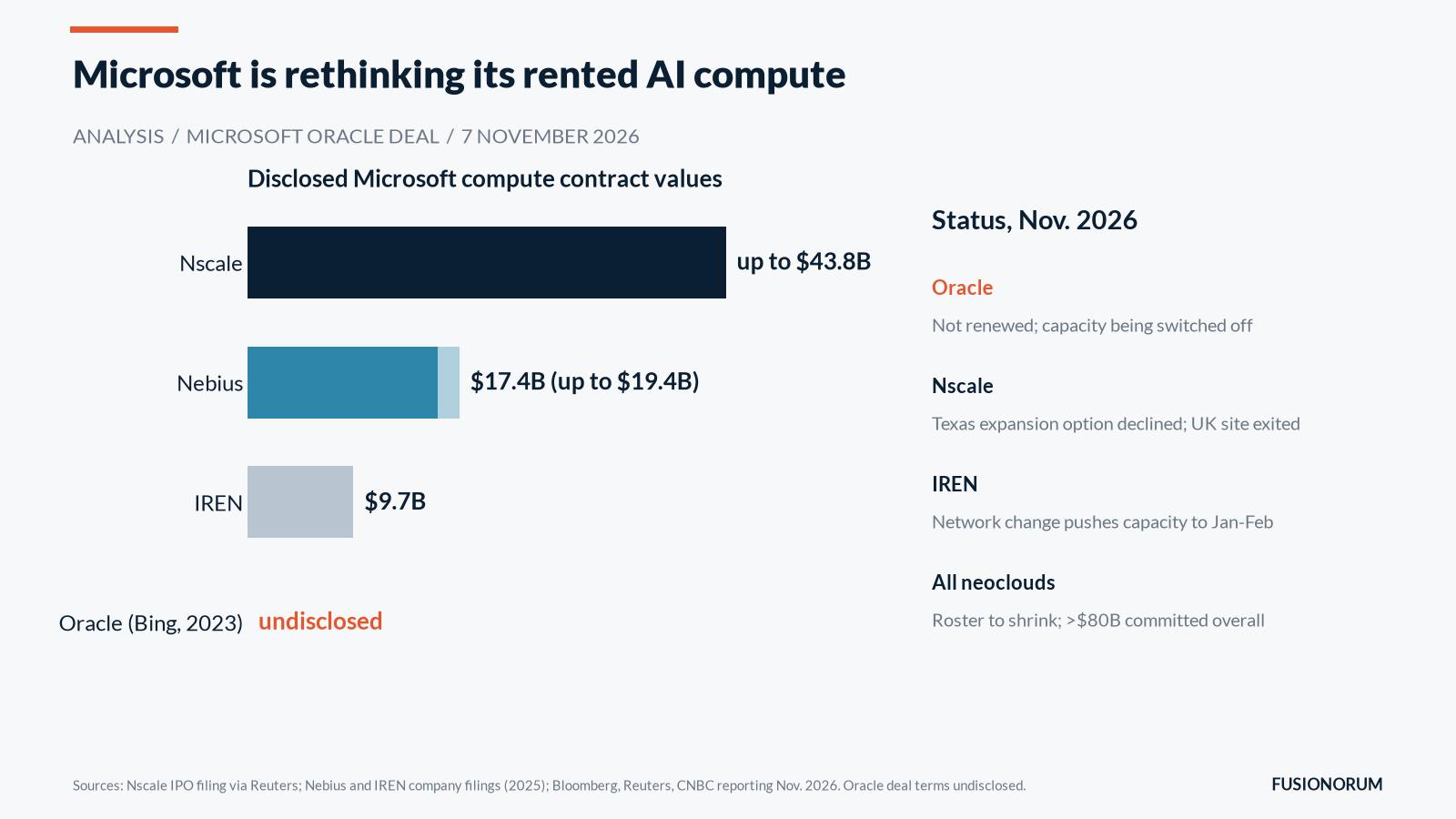
The Microsoft Oracle deal to rent AI computing is being wound down, Bloomberg reported on Nov. 6, a contract of undisclosed size that raises a larger question for the AI cloud industry: who holds the hardware when a big tenant decides older chips are no longer worth paying for. According to the report, Microsoft declined to renew the arrangement and has been switching off the rented Oracle capacity in recent months. The servers ran an older generation of Nvidia chips and no longer fit Microsoft's specifications, people familiar with the matter said. An Oracle spokesperson said demand for Oracle Cloud Infrastructure AI capacity remains strong, including for earlier-generation GPUs. Oracle shares fell about 3% during the session. What was the Microsoft Oracle deal? Oracle announced the multi-year agreement in 2023. Microsoft used OCI AI infrastructure to run inference for the AI-assisted, conversational version of its Bing search engine. Financial terms were never disclosed, and Bloomberg could not determine the deal's full size. The timing matters more than the dollars. The contract was signed in the GPU rush after ChatGPT's launch, when Microsoft rented capacity wherever it could. Three years later, those chips are a generation or more behind. Why is Microsoft pulling back from rented AI compute? The Oracle decision is part of a broader review. Microsoft has committed more than $80 billion to rent capacity from specialist "neocloud" providers such as CoreWeave, Nebius, Nscale and IREN, and Bloomberg reported that its leaders have grown frustrated with costs and delays. CNBC reported that Microsoft plans to shrink its roster of neocloud partners, keep a few key suppliers and prioritize its own data centers. Microsoft said it regularly reviews these investments against customer demand. The friction is visible at individual sites. Microsoft will not exercise an option to more than double its Texas agreement with Nscale, Reuters reported, though the existing contract stands. Weeks earlier it walked away from anchoring Nscale's Loughton site in England after grid connection delays. IREN said a Microsoft request to upgrade networking equipment will push capacity it handed over in August into January or February, delaying its target of more than $4 billion in annualized revenue run-rate. On its October earnings call, Microsoft said some GPU contracts had slipped into the first half of 2027. Microsoft has disclosed or reported rental contracts worth tens of billions of dollars with neoclouds; the 2023 Oracle deal is not being renewed. Who carries the risk when AI chips age? Rented AI compute rests on a simple bet. The provider buys GPUs, often with debt, and recovers the cost through multi-year contracts with a creditworthy tenant. If the tenant leaves at renewal, the provider must re-rent older hardware in a market where newer chips set the price. That is the core of the depreciation debate. Cloud companies spread the cost of servers over several years, while critics argue the economic life of a frontier GPU may be shorter than those schedules assume. Gartner warned in October that more than $3.5 trillion of AI infrastructure spending could be exposed to impairment by the end of 2030 and predicted that over 80% of neocloud providers will cease independent operations by then. A non-renewal on older Nvidia hardware tests those assumptions in practice. Contract terms decide how much of that risk moves to the provider. IREN's five-year, $9.7 billion Microsoft agreement includes a 20% prepayment on each tranche, but Microsoft can terminate, after a cure period, if delivery dates are missed. Nebius signed a five-year deal valued at $17.4 billion, potentially rising to $19.4 billion. Nscale disclosed statements of work with Microsoft worth up to about $43.8 billion through 2033. Those headline values depend on sites being powered, built and accepted on schedule. What does it mean for Oracle? For Oracle, the Bing contract sits beside a backlog of remaining performance obligations that reached $664 billion at the end of August, up $209 billion from a year earlier. The bigger signal is about the shape of that backlog. Oracle spent $28.5 billion on capital expenditures in its fiscal first quarter, against $8.5 billion a year earlier, and quarterly depreciation more than doubled to about $3.2 billion. Free cash flow was negative $5.4 billion. Oracle has responded by shifting funding to customers. Its chief financial officer said most new contracts in the quarter used prepayments, customer-supplied hardware or similar structures, and Oracle booked $11.4 billion of customer prepayments tied to capital spending. That reduces the cash Oracle must raise, but it also suggests bargaining power is shifting toward whoever pays for the chips. Oracle's earlier $20 billion stock and bond sale covered the funding side of that buildout. Oracle RPO reached $664 billion in Q1 FY27 as quarterly capex climbed to $28.5 billion. What happens next for neoclouds? CoreWeave and Nebius report next week, and investors will look for renewal terms, customer concentration and how much contracted capacity has been accepted. CoreWeave said at its 2025 listing that Microsoft accounted for 62% of its 2024 revenue, a reminder of how much one tenant's choices can move a provider. The Gartner forecast frames the longer view: if AI revenue lags spending, the write-downs land on whoever owns the assets. Microsoft's quiet exit from a three-year-old rental suggests large tenants intend to keep flexibility, and that landlords of older GPUs will need new tenants or contracts that pay before the hardware ages. How rented AI capacity moves risk between provider and tenant, and the contract terms that shift it back. Quick facts Deal: 2023 Oracle-Microsoft agreement to run Bing conversational search on OCI; terms undisclosed; not renewed Hardware: older-generation Nvidia GPUs, per Bloomberg Microsoft neocloud commitments: more than $80 billion across CoreWeave, Nebius, Nscale, IREN and others Disclosed deals: Nscale up to about $43.8 billion; Nebius $17.4 billion (up to $19.4 billion); IREN $9.7 billion Oracle Q1 FY27: RPO $664 billion; capex $28.5 billion; free cash flow negative $5.4 billion Gartner: more than $3.5 trillion of AI infrastructure spending exposed to impairment by 2030 Sources: Bloomberg, Reuters and CNBC reporting, company filings and statements, and Gartner research.