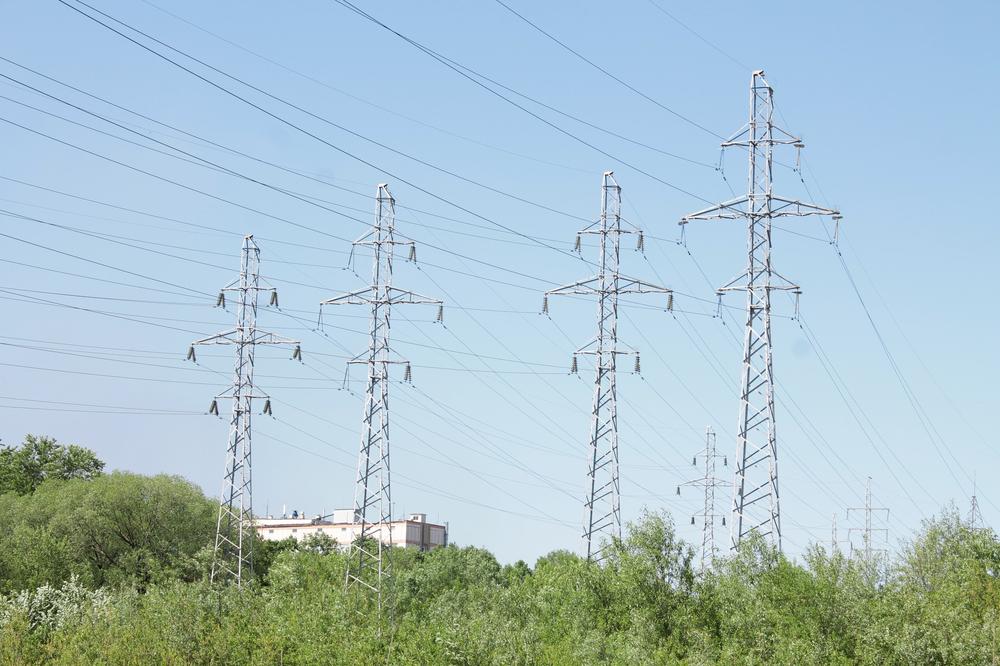
Norway's grid operator has stopped promising power to new data centers, a pause that puts one of Europe's most sought-after locations for artificial intelligence computing on hold until as late as August 2027. Statnett, the state-owned transmission system operator, said on Nov. 9 that it is temporarily halting new grid-capacity reservations for data centers. It also stopped processing new applications for technical approval of facilities, and froze applications already received for sites that would plug directly into the 420-kilovolt backbone grid. The company expects to lift the measure no later than Aug. 1, 2027. The numbers explain why. According to Statnett's announcement, 800 megawatts of data centers are connected in Norway today, 4,200 MW have reserved capacity and 9,100 MW sit in the connection queue. Requests for a further 18,000 MW have been filed. Norway's maximum electricity demand is only a little over 25,000 MW. Why did Statnett pause data center grid connections? The operator framed the decision as a risk-reduction step for system stability, not a verdict on demand. Peer Olav Østli, Statnett's executive vice president for system operations and markets, said data centers combine very large volumes of capacity with technical characteristics that matter for secure and stable operation of the power system. Statnett said those characteristics set data centers apart from traditional heavy industry. Their consumption can swing by large amounts very quickly, it is controlled by software, and the sites can be more vulnerable to disturbances on the grid. Norway data center grid pipeline by stage compared with national peak electricity demand. The pause is not a blanket ban. Existing connections are unaffected, and facilities whose functional requirements have already been approved can still connect. Pending regional-grid applications for sites due to start up soon will continue, and Statnett said it may process some smaller projects before August 2027. It also said freed-up capacity will not be handed to other customers at the expense of data centers ahead of them in the queue. What technical rules could AI data centers face? Statnett plans to use the pause to write new functional requirements, which will go to public consultation and need approval from the energy regulator, RME. Examples it has given include when a data center must stay connected during a grid disturbance, how quickly its consumption may ramp up or down, and measures to reduce the risk of oscillations. It said it would seek to align the rules with other Nordic operators and the European grid body ENTSO-E. Server racks and a UPS power management module inside a data center, the kind of equipment that can drop or restore large loads during grid faults. The concern has a recent precedent. On June 6, a single-phase fault at Dublin's Poolbeg 220-kV substation caused about 480 MW of data center demand to disconnect, roughly 52% of data center load at the time, according to Irish grid operator EirGrid, as reported by TechTarget. EirGrid kept the system secure, but its modeling found that as much as 90% of data center demand could drop off under certain credible faults. Backup power systems that switch large loads off and on during disturbances are part of the problem. Statnett has not identified a specific disturbance caused by a Norwegian data center. A government-commissioned report by Menon Economics noted that Norway's hydropower-heavy grid has considerable inertia, and said more work is needed to establish whether rules developed abroad apply. Which data center projects are affected? The industry says the pause hits projects well into development, because technical approval comes late in the process. "Projects that already have reserved capacity could also face delays if they still need a technical approval covered by the suspension," said Reynir Johannesson, managing director of trade group Norwegian Data Center Industry. Business daily Dagens Næringsliv reported that data centers queued for nearly 11,000 MW are affected across the country, and named Nscale, which is building a large AI campus at Kvandal in Narvik municipality, as the biggest loser. Nscale had already warned in May, after Statnett paused new industrial reservations in northern Norway, that later phases of its project were uncertain, and pointed to a similar-sized project it had announced in Portugal. An overhead power line in Ballangen, Narvik municipality, in northern Norway, where data center demand has outrun grid capacity. Alongside the pause, the government said it plans a licensing regime covering existing and future data centers, with priority for facilities serving critical public services and AI capacity, Reuters reported. Data centers made up 75% of the 26,000 MW of connection applications received in 2026, and new sites may be asked to pay grid costs or build their own power supply. How does Norway compare with other European grids? Norway is not alone. Denmark's Energinet paused new grid-connection agreements in March after requests for about 33.5 gigawatts of new consumption, from data centers, hydrogen and batteries, against a peak demand of roughly 7 GW. It has since moved from first-come, first-served to screening projects by maturity. Data center grid requests in Norway and Denmark compared with national peak electricity demand. The common thread is speculative demand. Developers can lock up capacity years before they have customers or financing. "A megawatt requested, a megawatt reserved, a megawatt deliverable and a megawatt generating sustained revenue are not interchangeable," said Neil Osnato of Persistence Analytics Group. As with the AI power equipment crunch, the binding constraint on AI growth is increasingly physical. For hyperscalers drawn to Norway by cheap, renewable hydropower and a cool climate, the immediate question is timing. Draft requirements must be written, consulted on and approved before the Aug. 1, 2027 deadline Statnett has set for itself. Quick facts What happened: Statnett paused new grid-capacity reservations for data centers on Nov. 9, 2026. How long: Until no later than Aug. 1, 2027, once new technical rules are approved by regulator RME. How big is demand: 800 MW connected, 4,200 MW reserved, 9,100 MW queued and 18,000 MW requested, against peak demand of just over 25,000 MW. Who is exempt: Existing connections and sites with approved functional requirements. Sources: Statnett, EirGrid and Energinet data, and reporting by Reuters, TechTarget, Dagens Næringsliv and NRK.