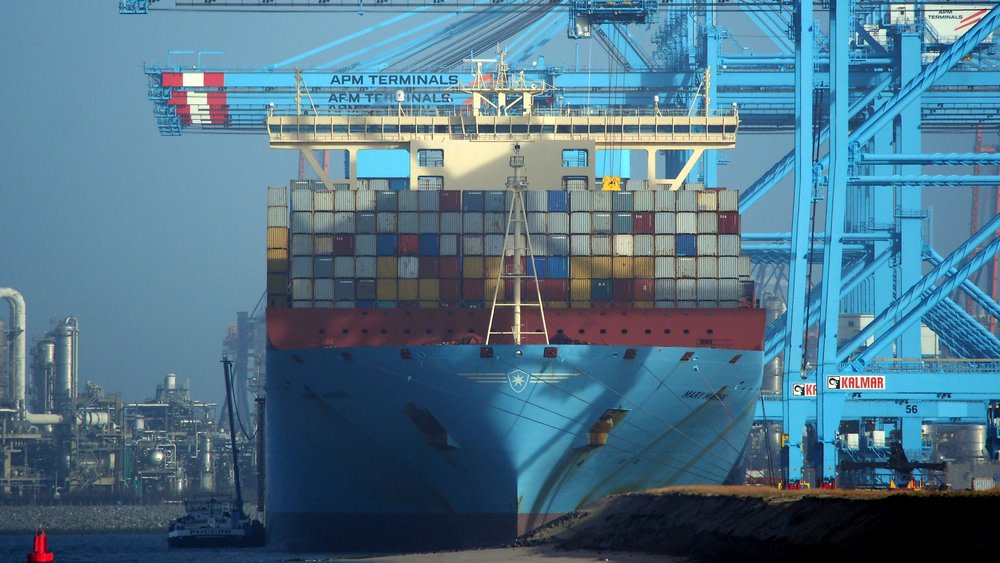
Port congestion is building at northern Europe's biggest container hubs as shipping lines move more Asia-Europe services back to the Suez Canal, sending faster ships into terminals that were already crowded. Freight forwarder Flexport projects that vessel capacity arriving at North European ports in the week of Nov. 16 to 22 will reach 131% of normal, with about 40% of it coming via Suez. The squeeze arrives at the start of the year-end peak. Delays at the quay spill into rail, barge and truck schedules, raise costs for hauliers and can hold up parts that factories need on time. It also lands as carriers and shippers negotiate 2027 contracts. A shorter route needs fewer ships, which could weigh on freight rates. Why is Suez Canal shipping causing port congestion? The problem is timing. Sailing through Suez cuts roughly seven to 10 days from the voyage, Flexport says, so ships can reach Europe at the same time as vessels that left Asia earlier and are still sailing around the Cape of Good Hope. In week 47, 31 container ships are due via Suez alongside 61 on the Cape route, Jannik Amstutz, Flexport's senior manager of ocean freight, said in a Nov. 10 market briefing. Flexport treats anything above 120% of normal as a congestion risk and expects that level in at least three of the 11 weeks through early January. Rotterdam is projected at 145% of normal and Antwerp-Bruges at 151%, with London Gateway, Felixstowe, Bremerhaven and Le Havre all above 150%, Sourcing Journal reported. The figures compare scheduled capacity with the first-half 2026 average, not containers unloaded. The return is gradual. Maersk and Hapag-Lloyd said in early November that their ME1 India-Europe service would join six other Gemini Cooperation loops routed through the canal, and Evergreen's 16,556-TEU Ever Eon made the line's first Suez transit in three years on Nov. 8. Maersk says any further changes depend on continued stability in the Red Sea area. Why are Felixstowe and London Gateway turning away empty containers? Britain's two largest container gateways already show the strain. Maersk told customers on Nov. 13 that London Gateway and Felixstowe Quay were closed to returns of empty containers, with London Gateway expected to reopen on Monday, Nov. 16, and Felixstowe not before Wednesday, Nov. 18, Maritime News reported. London Gateway has stopped accepting Maersk empties on and off since Oct. 23. A full yard slows everything else, and hauliers must reroute empty boxes to other depots, adding cost. Maersk has said weather was the main driver of disruption across North Europe in recent weeks and had compounded congestion and yard-density pressures at some UK gateways. London Gateway on the Thames estuary, one of the UK container ports affected by port congestion this autumn. Which European container ports are most congested? On the continent, yards were tight before the wave peaked. In Rotterdam, ships waited an average of 1.87 days in the week to Nov. 10, and yard utilization at the ECT terminal reached 94%, according to Kuehne+Nagel data cited by Austrian trade magazine Industriemagazin. Hamburg's average wait was 1.79 days, with the Container Terminal Hamburg yard 90% full, while the North Sea Terminal in Bremerhaven reached 93%. Maersk expects rail capacity at APM Terminals Maasvlakte II in Rotterdam to stay limited until the end of June 2027 because of expansion work, and low water on the Rhine has added surcharges and limited barge capacity, Flexport said. Terminals depend on a steady rhythm between quay cranes, yard stacks and outbound trucks and trains. When ships bunch, containers sit longer and the space needed to unload the next vessel shrinks. Container stacks and cranes in Bremerhaven, one of the North Sea ports facing port congestion as Suez arrivals bunch. What does the Suez return mean for container shipping rates? Over time the shorter route should add supply. Diversions around Africa absorbed about 6% of global container capacity, according to Alphaliner figures cited by Flexport. Spot rates are already easing. The Drewry World Container Index fell 2% to $4,305 per 40-foot container on Nov. 12, and the Shanghai-to-Rotterdam rate fell 3% to $3,504, which Drewry attributed to weak demand. Flexport says weekly Asia-North Europe capacity hit a record of about 350,000 twenty-foot equivalent units in October and November. Carriers are trying to hold prices. Drewry counted eight blank, or canceled, Asia-Europe sailings for this week, up from five, and lines have announced higher rates and surcharges for the second half of November. Hapag-Lloyd has published a Far East to North Europe tariff of $4,500 per 40-foot container from Dec. 1. The next test is the run-up to Christmas and an early Lunar New Year in February. If schedules settle, the Suez route could bring shorter transit times and cheaper freight in 2027. Until then, the cost is likely to show up as longer waits at the quay. Quick facts Peak: Flexport expects arrivals at North European ports at 131% of normal capacity in the week of Nov. 16-22 Threshold: Flexport sees a congestion risk above 120%, expected in at least three weeks through early January UK: Maersk said Felixstowe would not reopen to its empty container returns before Nov. 18 Rates: Drewry's Shanghai-Rotterdam spot rate fell 3% to $3,504 per 40-foot container on Nov. 12 Sources: carrier advisories, Flexport and Drewry market data, and trade press reporting.