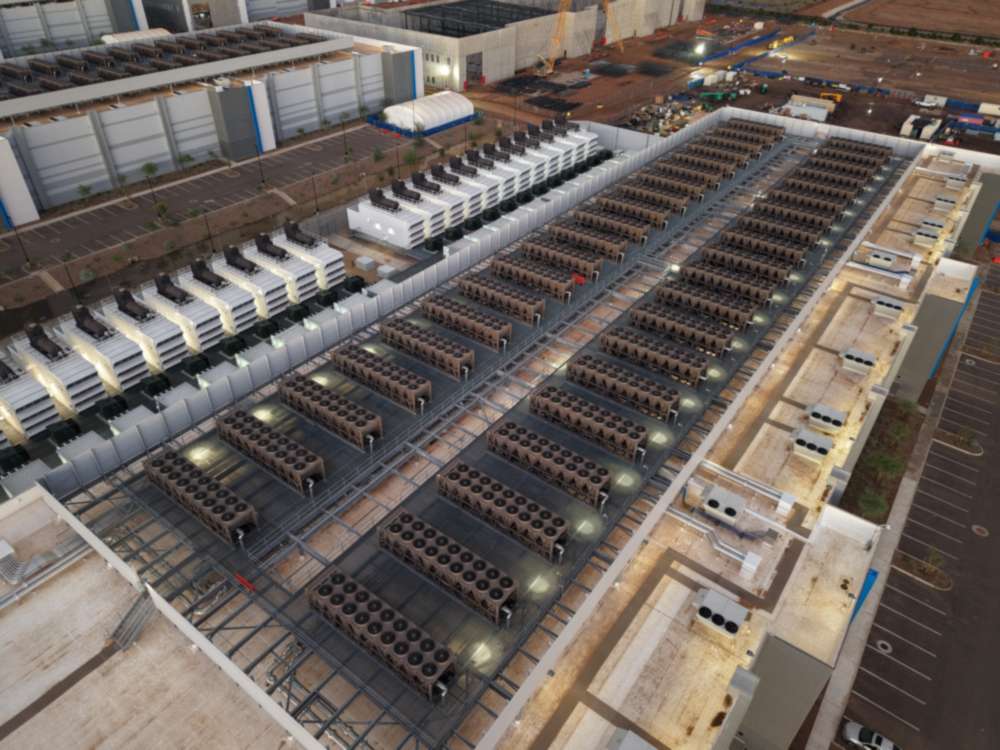
The Samsung Modine talks reported this week would give the South Korean electronics giant a U.S. base in one of the tightest corners of the artificial intelligence buildout: the machines that pull heat out of data centers. Bloomberg News reported on Thursday, Nov. 12, that Samsung Electronics is negotiating to buy Modine Manufacturing, a Racine, Wis., maker of chillers and other cooling equipment, citing people familiar with the matter. An agreement could come within weeks, but no final decision has been made, the talks could still fail and another bidder could emerge. Both companies declined to comment, and Reuters said it could not immediately verify the report. Investors priced in a premium anyway. Modine shares closed 28% higher at $135.66 on Friday, their biggest one-day gain since 2020, lifting its market value to about $7.2 billion from roughly $5.6 billion. Why has data center cooling become a bottleneck? AI processors pack far more power into each server rack, and that power leaves the chip as heat. When Schneider Electric agreed to buy liquid cooling specialist Motivair in 2024, it argued that air cooling on its own can no longer keep up with accelerated computing, which is why operators are moving to liquid. The setup works in layers. Cold plates sit directly on the chips, coolant distribution units, or CDUs, pump and regulate the liquid loop, and the heat is handed to larger systems such as chillers that reject it outdoors. Air handlers and fan walls still cool the rest of the hall. The constraint is less the physics than the factories. Modine booked more than $1 billion of data center orders in its latest quarter, a record for the fourth quarter in a row, and plans to lift its North American chiller lines from 13 to 20 by the end of March. In May, one unnamed customer paid Modine $165 million upfront to reserve capacity for more than $4 billion of its Airedale cooling products from 2027 through 2029. Buyers prepaying for factory slots is a sign of scarcity. What does Modine do? Modine spun off its vehicle and off-highway business on Oct. 1 in a combination with Gentherm, leaving two segments: Data Centers and Commercial HVAC. In the quarter ended Sept. 30, Modine reported Data Centers sales up 95% to $439.7 million, driven by hyperscale customers in North America, while Commercial HVAC rose 23% to $285.5 million. The data center unit sold $1.11 billion in the fiscal year that ended in March. Modine data center sales rose 95% from a year earlier in the September quarter. Growth has come with strain. The segment's gross margin fell 4.7 percentage points to 19.7% on higher material, component and tariff costs, and Modine used $145.6 million of free cash flow in six months as it spent on plants and inventory. The stock had dropped about 15% after the Nov. 3 results. For the fiscal year ending March 2027, the company expects sales of $3.1 billion to $3.2 billion, with Data Centers up 80% to 90%. What would Samsung gain from buying Modine? Diversification is the clearest draw. Bloomberg Intelligence analyst Masahiro Wakasugi said a deal would help Samsung, which relies heavily on memory chips, build other growth businesses with the cash its semiconductors generate. Samsung has already started down this path. It agreed in May 2025 to buy Germany's FläktGroup for 1.5 billion euros, about $1.7 billion, citing data center cooling as a priority, and completed the deal later that year. Seoul Economic Daily reported that FläktGroup brought CDUs, computer room air handlers and fan wall units. Modine would add U.S. factories, including a new chiller plant in Grand Prairie, Texas, and ties to North American hyperscale customers. No price has been reported by Bloomberg or the companies. Seoul Economic Daily estimated a full takeover at $7.5 billion to $8 billion, applying a 33% to 42% control premium to Modine's pre-report value. That would rival the $8 billion Harman purchase in 2017, Samsung's biggest acquisition. As with the AI power equipment crunch, physical infrastructure is becoming the scarce input. How does it compare with other cooling acquisitions? Eaton completed its $9.5 billion purchase of Boyd Thermal in March, while Schneider paid $850 million in cash for an initial 75% of Motivair. Daikin, LG Electronics and Vertiv are also expanding in the field, and LG is building a chiller plant in Virginia. An estimated Modine price would sit near the top of recent cooling deals. Bloomberg Intelligence analyst Christina Feehery noted that Modine's data center business grew 86% a year over the past three fiscal years, yet the company remains small beside the largest HVAC manufacturers, which makes it a candidate for vertical integration. What happens next? Modine plans to present longer-term targets at its analyst and investor day on Nov. 18. Any deal would need broad shareholder backing: Seoul Economic Daily reported that Modine's articles require two-thirds of voting power for major mergers, and its shares are widely held. Activist investor Jana Partners also disclosed a stake of about 0.5% on Friday. If a deal is signed, it would show that the AI race is being fought over pipes, pumps and factory capacity as well as chips. Quick facts Report: Bloomberg News, Nov. 12, 2026; talks ongoing, no agreement, companies declined to comment Modine shares: up 28% to $135.66 on Nov. 13; market value about $7.2 billion Modine Data Centers sales: $439.7 million in the September quarter, up 95% Fiscal 2027 outlook: sales of $3.1 billion to $3.2 billion, Data Centers up 80% to 90% Capacity deal: more than $4 billion of products reserved for 2027 to 2029, $165 million paid upfront Samsung cooling deals: FläktGroup for 1.5 billion euros in 2025; largest acquisition Harman for $8 billion in 2017 Sources: company filings and statements, Bloomberg and Reuters reporting, and Seoul Economic Daily.