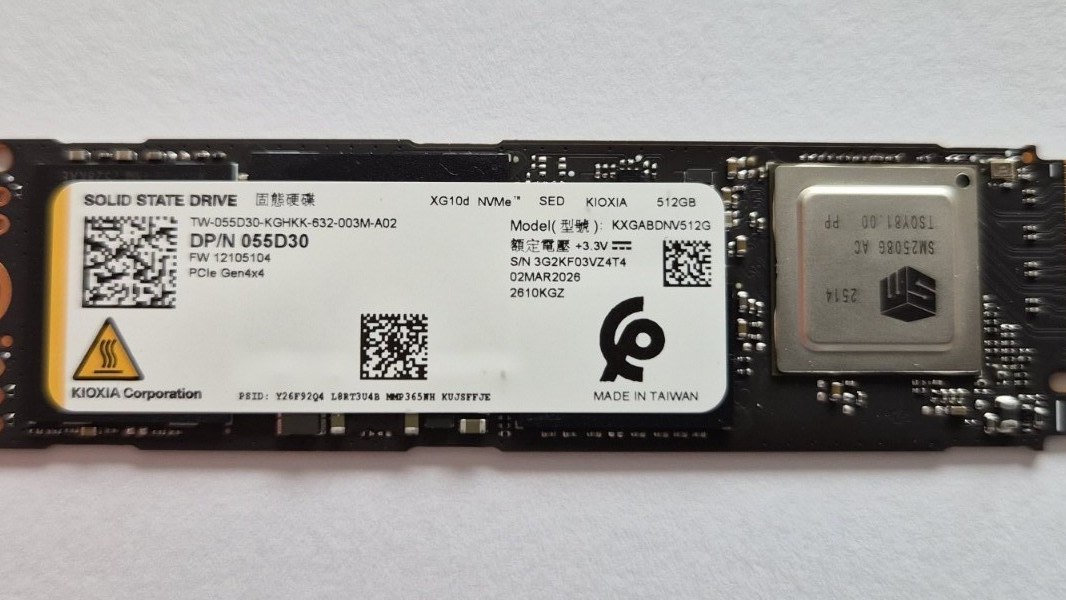
SK hynix will become the largest shareholder in Japanese rival Kioxia Holdings by converting bonds tied to its 2018 investment, turning the SK hynix Kioxia stake into an indirect holding of about 14.1%. The South Korean memory maker disclosed the plan in a regulatory filing on Nov. 20 and said the conversion is scheduled for Dec. 4. The move links, on paper, the second- and fourth-largest makers of NAND flash, the memory in phones, PCs and the solid-state drives that store data for AI systems. It comes as the price surge behind a record year for flash makers shows signs of leveling off, and as Kioxia shares fell almost 12% on Friday in a broad chip selloff. SK hynix said it has no plans to expand its role in Kioxia's management, buy more shares or sell its stake, Yonhap News Agency reported. Its rights to appoint Kioxia directors remain restricted, according to The Herald Business. How does the SK hynix Kioxia stake work? The holding sits in BCPE Pangea Cayman2, a vehicle created when a Bain Capital-led consortium bought Toshiba's memory business in 2018. Under SK hynix's filing, the company will convert bonds issued by that vehicle into 129,000 common shares and buy the remaining 1,001 shares from a Bain affiliate for 100 million yen, leaving it with all of the vehicle. The bonds have a face value of 129 billion yen, about $810 million. They were part of a 395 billion yen commitment, about $2.48 billion at current rates, Reuters said. The other 266 billion yen went into an equity fund managed by Bain, which SK hynix had fully exited by June after Kioxia listed in Tokyo in December 2024, Yonhap reported. Most of the gains have already gone to SK hynix investors. The company said last month it would pay a special dividend of about 7 trillion won, or 10,000 won a share, from the Kioxia investment. "It has been our principle to share most of the gains from strategic investments with our shareholders when those investments bear fruit," President Kwak Noh-jung said at the time. Who are the largest Kioxia shareholders? Once the transaction closes, SK hynix will rank first, ahead of Toshiba, which held about 10.46% as of early November, according to Yonhap. At Kioxia's market value of 11.68 trillion yen on Nov. 20, based on S&P Global Market Intelligence data, a 14.1% holding would be worth roughly 1.6 trillion yen, more than 12 times the face value of the bonds. That simple calculation ignores the indirect structure and lack of control. Kioxia makes the NAND flash memory inside solid-state drives such as this compact PC module. Why have Kioxia shares swung so sharply? Revenue in the July-September quarter reached a record 2.48 trillion yen, more than the company's entire previous fiscal year, and net profit reached 1.35 trillion yen. Average selling prices of its flash memory rose in the mid-20% range, after a 70% jump in the prior quarter, Bloomberg reported. The outlook cooled that enthusiasm. Kioxia guided for operating profit of about 2 trillion yen in the October-December quarter, below analysts' estimates of 2.35 trillion yen, and revenue of about 2.5 trillion yen, up only about 1%. On Nov. 20 the stock fell 11.66% to 7,307 yen as the Nikkei 225 dropped 5.06%. Kioxia market value is up about 13-fold since its December 2024 listing, despite the latest drop. Even so, Kioxia is worth about 13 times the roughly 863 billion yen of its first trading day. The rally tracked the same AI-driven squeeze on memory supply described in an earlier Tabbicus explainer on the memory chip shortage. What does the deal mean for the NAND flash market? SK hynix held 19% of global NAND flash revenue in the April-June quarter and Kioxia 14%, according to Counterpoint Research. Together that is 33%, ahead of market leader Samsung at 28%, although SK hynix will not control Kioxia and the two remain competitors. SK hynix and Kioxia rank second and fourth in the NAND flash market by revenue. Counterpoint said the NAND market grew 70% in the second quarter, helped by a 55% quarter-on-quarter rise in prices. Supply looks tight for now. Kioxia says its 2027 capacity is largely sold out and that long-term agreements cover more than half of its 2028 volume, and management expects tight supply through 2027. SK hynix reported record third-quarter results last month, as covered on Tabbicus. The main risk is pricing. Kioxia expects roughly flat bit shipments this quarter, and slower price gains would test valuations that climbed with the cycle. Memory makers from Seoul to Tokyo fell together on Friday as investors cut AI exposure. The next markers are the Dec. 4 conversion, which SK hynix said could shift, and flash pricing for the January-March quarter. Both will show whether a 2018 bet on Toshiba's chip unit keeps paying off for a passive holder. Quick facts Deal: SK hynix converts 129 billion yen of bonds and buys 1,001 more vehicle shares from Bain for 100 million yen. Stake: an indirect holding of about 14.1% in Kioxia, ahead of Toshiba at about 10.46%. Timing: the conversion is scheduled for Dec. 4, 2026, subject to change. Market: SK hynix 19% and Kioxia 14% of NAND flash revenue in Q2 2026, per Counterpoint. Sources: company filings and earnings disclosures, market data, and Reuters, Yonhap and Bloomberg reporting.