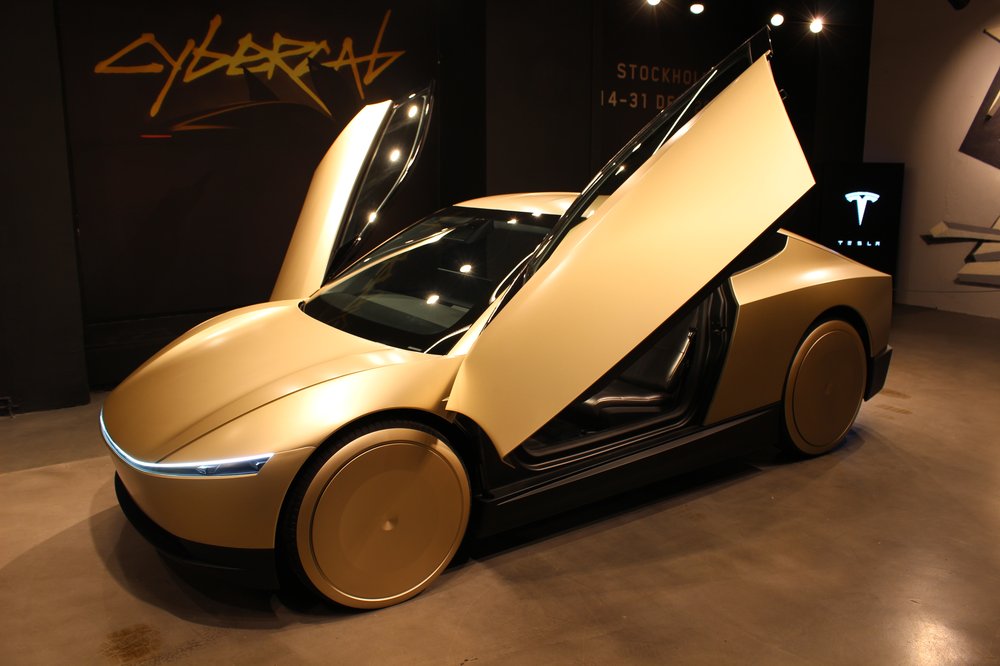
The Tesla Giga Berlin expansion announced on Nov. 16 commits a first €3 billion, about $3.3 billion, to a new production hall at Grünheide, outside Berlin, that the company says will be able to build up to 1 million Cybercab robotaxis a year. Tesla said it would apply for a building permit before the end of 2026, begin construction in the first half of 2027 and start Cybercab production in 2029. The plant, Tesla's only vehicle factory in Europe, builds just the Model Y today. Plant manager André Thierig said the site would become the most technologically advanced Tesla factory in the world, according to TechCrunch. The plan matters because it is Tesla's clearest signal yet that it intends to build its two-seat, steering-wheel-free robotaxi in mass volume outside the US, and to do it in a market where such vehicles cannot yet be sold in large numbers. It also runs against the direction of the German car industry, where established manufacturers are cutting costs and jobs. What is Tesla building at Giga Berlin? According to Tesla's statement, the €3 billion pays for a production building north of the existing plant, ancillary buildings and a second wastewater treatment plant. Berlin newspaper Tagesspiegel reported that the new hall is planned at about 500,000 square meters of floor space, roughly twice the size of the current main production building. The expansion itself is not a new idea. Tesla outlined a path to 1 million vehicles a year at the site in permit filings in 2023 and has been clearing land since, Electrek reported. What changed on Monday is the product: until now Tesla had said only that the second hall would not be another Model Y factory. The existing plant is running close to its limit. Tesla aims to raise output to 7,500 Model Y vehicles a week, equal to about 375,000 a year, DW reported. Even at that pace, the factory would fall short of the 500,000 units a year Tesla targeted when it opened in 2022, according to Electrek. Employment at the site fell to about 11,000 before recovering to 12,600 in October, and Tesla said it is seeking several hundred more staff for construction and production planning. Tesla Giga Berlin expansion: the planned Cybercab hall is rated for up to 1 million vehicles a year, against an EU limit of 1,500 registrations per driverless vehicle type How does the Cybercab fit Tesla's strategy? The Cybercab, first shown in 2024, has no steering wheel or pedals and relies on cameras rather than lidar to drive. Tesla started Cybercab production in Texas in April, and the vehicles began carrying the public in September. TechCrunch counted about 1,307 Tesla robotaxis registered in Texas, most of them modified Model Ys, including about 573 Cybercabs in Austin and soon Dallas. The company is reorganizing its US manufacturing around the vehicle. Tesla plans to end Cybertruck production at its Austin plant, which Elon Musk has said will free room for more Cybercabs. On Nov. 13 it began inviting selected US buyers to order a Cybercab for personal use at $29,990 plus a $299 monthly subscription, a step covered in an earlier Tabbicus explainer on Cybercab pricing. Can Tesla sell robotaxis in Europe? Not in volume under current rules. The European Union has a type-approval route for the automated driving systems of fully driverless vehicles, set out in Implementing Regulation (EU) 2022/1426, but robotaxis remain in a small-series track limited to 1,500 registrations per vehicle type per year across the bloc, Electrek reported. The European Commission has said it wants large-series approval for more driverless uses, and a United Nations regulation for automated driving systems is in development. Tesla also has no approval anywhere in Europe for its software to drive without supervision. The Dutch vehicle authority RDW approved a supervised version, branded Tesla Assisted Driving, which nine other countries recognize and which still requires an attentive driver. Cybercabs built in Germany could be exported, but the planned capacity far exceeds any robotaxi fleet operating today. Tesla Giga Berlin expansion timeline: permit application by end of 2026, construction in the first half of 2027 and Cybercab production in 2029 What does the Giga Berlin expansion mean for investors? For Tesla, the investment adds to a capital spending plan of about $20 billion for 2026, while free cash flow has declined from a year earlier, StreetInsider reported. Tesla shares were down 2.6% at midday in New York on Monday, while the Nasdaq 100 fell 2.1%, as a broad technology selloff overshadowed the news. For Germany, Reuters reported that the addition could make Grünheide the country's largest car plant by capacity, ahead of Volkswagen's Wolfsburg headquarters plant. Automotive analyst Matthias Schmidt told Reuters that the open question is how much of the investment will create long-term employment and how much will be highly automated. Tagesspiegel reported that Tesla's investment at the site, including battery cell production due to start next year, has reached about $10 billion. What happens next for Tesla Giga Berlin? The next checkpoint is the building permit application, due before year end, followed by the start of construction in 2027. The larger variable is regulatory: whether European rules allow driverless vehicles in large numbers by 2029 will determine whether the new hall serves a European robotaxi market or mainly supplies fleets elsewhere. Quick facts Announcement: Nov. 16, 2026, first investment of about €3 billion ($3.3 billion) Capacity target: up to 1 million Cybercabs a year in a new hall at Grünheide Timeline: permit application by end of 2026, construction from first half 2027, production in 2029 Current output target: 7,500 Model Y a week, about 375,000 a year Workforce: about 12,600 in October, with several hundred more hires planned EU limit: 1,500 registrations per driverless vehicle type per year under the small-series route Market reaction: Tesla shares down 2.6% at midday Nov. 16, versus a 2.1% drop in the Nasdaq 100 Sources: company statements and reporting by Reuters, TechCrunch, DW, Electrek and Tagesspiegel