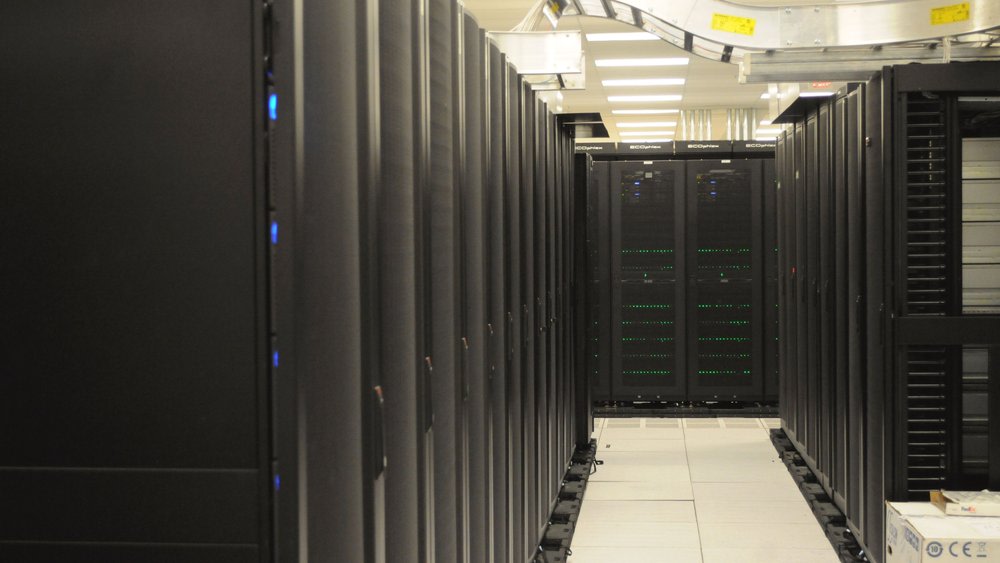
The TOP500 supercomputer list released Nov. 16 showed no change among the world's 10 fastest machines and only 27 new entries, the fewest since the ranking began in 1993. The 68th edition, published at the SC26 conference in Chicago, suggests that much of the world's new high-end computing hardware is going into commercial AI data centers rather than into the scientific systems the list was built to track. The shift matters for chip suppliers, system builders and the research centers that compete for the same accelerators. In Europe, where flagship machines such as JUPITER are publicly funded, it also means the next jump in capability now depends largely on new systems due in 2027. Why did so few systems join the TOP500 supercomputer list? New systems made up just 5.4% of the November list, according to the TOP500 announcement. The organizers said the result does not mean performance has stopped growing. Instead, more of the improvement is coming from upgrades and additions below the very top. The organizers pointed to estimates from research group Epoch AI. Quarterly additions to global AI computing capacity have grown roughly 2.5 times a year, and cumulative AI compute now exceeds the equivalent of 15 million Nvidia H100 chips. As of the fourth quarter of 2025, five large U.S. cloud providers owned an estimated 71% of that capacity, much of it in very large clusters that rarely submit benchmark results. That build-out is the same spending wave that has pushed Big Tech AI capital expenditure beyond operating cash flow. Lower down, the list kept growing. The No. 500 system now delivers 2.857 petaflops, up 7.3% since June. The threshold at No. 50 rose 12.0%, and combined performance across all 500 systems increased 4.4% to 19.57 exaflops. Systems using accelerators rose to 291, or 58.2% of the list. TOP500 supercomputer list thresholds at No. 50 and No. 500 outpaced total performance growth in 2026 What is the fastest supercomputer in the world now? LineShine, at the National Supercomputing Centre in Shenzhen, remains No. 1 with 2.198 exaflops on the High Performance Linpack benchmark. Tom's Hardware reported that it runs only on CPUs and draws 42.22 megawatts. El Capitan at Lawrence Livermore National Laboratory follows at 1.809 exaflops, ahead of Frontier at 1.353 exaflops and Aurora at 1.012 exaflops. The highest-ranked newcomer is HANGANG at South Korea's KISTI, which entered at No. 12 with 342.6 petaflops. Rows of supercomputer racks like those that compete for a place among the fastest supercomputers in the world Where do European supercomputers rank? Germany's JUPITER Booster at the Jülich Supercomputing Centre is No. 5 at exactly 1.000 exaflop. It remains Europe's only exascale system and, at 15.79 megawatts, the most energy-efficient of the five exascale machines, according to Tom's Hardware. Eni's industrial HPC7 and HPC6 systems in Italy hold No. 6 and No. 8, and Switzerland's Alps is No. 10. Europe accounts for 166 of the 500 systems, according to the list data. AI cloud company Nebius has the ISEG2 system in the Netherlands at No. 17 with 202.4 petaflops. France leads on efficiency. The KAIROS system in Toulouse tops the Green500 at 73.28 gigaflops per watt, with French and German machines also in second and third place. European supercomputers hold four of the 10 places on the November 2026 TOP500 supercomputer list The only new entry from the EuroHPC Joint Undertaking was LISA, an AI-focused partition at CINECA in Bologna with 1,328 GPUs and 56.88 petaflops. EuroHPC said the first racks of Alice Recoque, Europe's second exascale system, are expected at the TGCC center near Paris in 2027. When the contract was signed in November 2025, installation had been expected to start in 2026. Its total cost is put at €354.8 million, and it is being built by Eviden's Bull with AMD processors and GPUs. What do AI data centers mean for supercomputer makers? Hewlett Packard Enterprise built 126 of the listed systems, Lenovo 119 and Bull 57, according to the list data. For these vendors, the TOP500 now captures a shrinking share of the market for accelerated computing. Nvidia, meanwhile, used SC26 to unveil Rubin HPC, a chip with more than 50,000 CUDA cores aimed at simulation and scientific AI agents. Tom's Hardware reported it will arrive in 2028. Public buyers are adapting. EuroHPC signed six contracts in 2026 for AI-optimized supercomputers, including systems in Spain, Germany, Finland and Italy, and it opened a tender for larger AI Gigafactories in July. Those sites will also need large grid connections, a constraint already visible in Norway's pause on new data center grid reservations. Is the TOP500 still a useful benchmark? HPCwire noted growing concern about the list's relevance. Spending on accelerated hardware runs to hundreds of billions of dollars a year, but fewer owners choose to run Linpack and publish the results. China has several exascale-class systems, HPCwire reported, yet only LineShine has submitted a score. The list still offers one of the few consistent public records of computing performance. The next edition is due in June, when the focus will be on whether new European and AI-oriented systems start to report results. Quick facts What: 68th TOP500 list, released Nov. 16, 2026 at SC26 in Chicago. No. 1: LineShine, China, 2.198 exaflops. The top 10 is unchanged since June. New systems: 27, or 5.4% of the list, the lowest ever. Europe: JUPITER Booster is No. 5 at 1.000 exaflop. Alice Recoque is due in 2027. Sources: TOP500 and EuroHPC announcements, plus Tom's Hardware and HPCwire reporting.